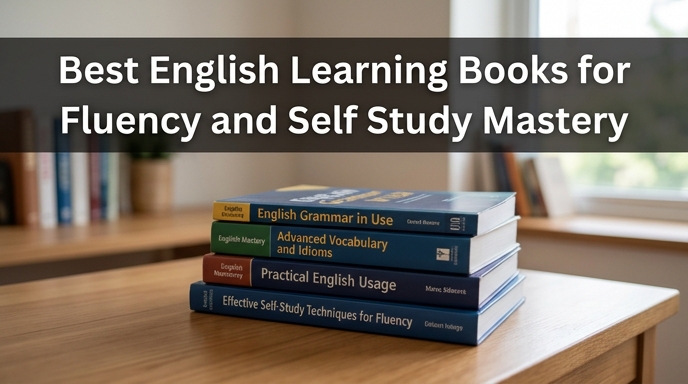
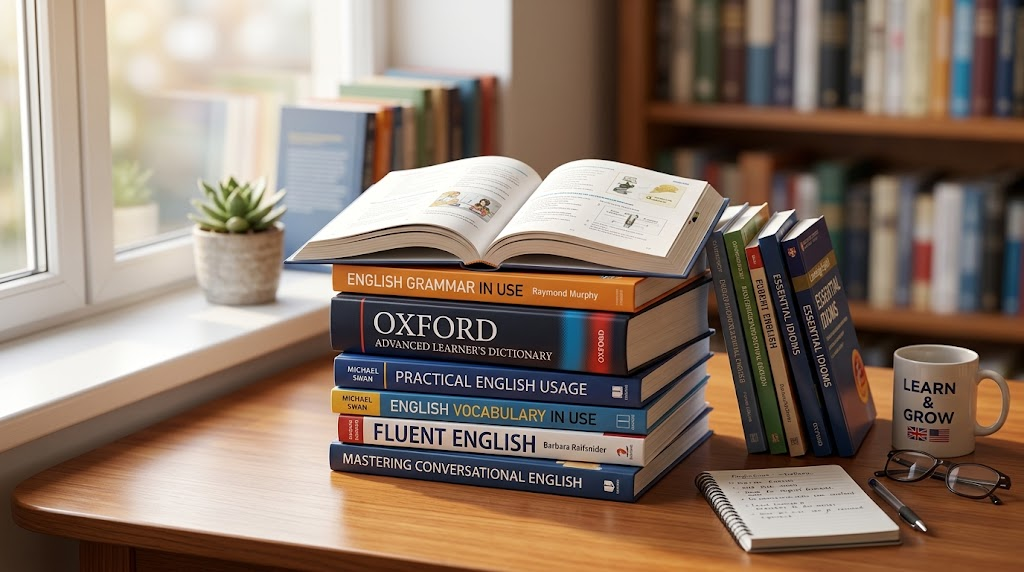
Choosing self-study resources for foreign languages requires careful selection of high-quality reading materials. The abundance of English learning books on the market often confuses learners who wish to improve their language proficiency effectively. Structured printed materials provide systematic guidance that cannot always be replaced by smartphone applications. Learning through books allows the mind to remain focused for longer, free from the distractions of device notifications.
Building a solid self-study curriculum begins with understanding your current level of language proficiency. Each stage of learning requires a different amount of practice, ranging from basic grammar to reasoning skills in complex discourse. By combining theoretical references with applied practice sheets, the process of absorbing foreign language insights will be more consistent and enjoyable for everyone.
Measuring Learning Needs Based on Global Proficiency Standards
 Before determining your study materials, you must recognize international benchmarks for language proficiency. The Common European Framework of Reference for Languages (CEFR) standard divides language ability into six levels, ranging from A1 to C2. This grouping helps you identify your starting point objectively.
For information, A1 and A2 level beginners need an introduction to simple daily sentence structures. Meanwhile, intermediate B1 and B2 levels focus on fluency in expressing opinions and understanding contextual reading. For advanced users at C1 and C2 levels, the main focus shifts to high-level linguistic nuances and analytical thinking. Aligning study materials with these standards ensures that your capacity-building process proceeds without excessive confusion.
Evaluating English Learning Books for Self-Study by Proficiency Level
Every learning phase requires a different type of guidance to ensure a strong language foundation. Using English learning books for self-study, specifically designed for independent learning, provides concise explanations along with answer keys.
Initial Foundation: Beginner Levels A1 and A2
Beginner-level learners need books that explain sentence grammar visually and straightforwardly. The Essential Grammar in Use series published by Cambridge English is an example of a guide that is very beginner-friendly, as it pairs theory on the left page with practical exercises on the right.
This dual-logic approach prevents boredom when digesting sentence rules. Explanations of practical vocabulary regarding daily activities also help boost the confidence of beginner learners when crafting their first spoken utterances.
Intermediate Improvement: Levels B1 and B2
The intermediate level is a crucial phase where learners begin to develop critical thinking in their second language. References like English Grammar in Use (intermediate level) challenge the understanding of complex clauses, conditional sentences, and phrasal verbs.
Furthermore, learners at this level should begin to incorporate authentic reading materials. Reading guided story adaptations helps you see how sentence structures come alive in full story paragraphs.
Advanced Proficiency: Levels C1 and C2
The advanced stage demands mastery of formal discourse and deep academic precision. Reference books like Advanced Grammar in Use present grammatical details that often confuse non-native speakers, such as sentence inversion and the selection of formal register words.
Interestingly, candidates for international certification exams like IELTS and TOEFL rely heavily on these advanced materials. High-level practice books train language logic sensitivity so that your academic essays meet international examiner standards.
Balancing Grammar and Vocabulary Books
Language proficiency cannot rely solely on memorizing sentence patterns without adequate lexical knowledge. Combining grammar and vocabulary books regularly creates a balance between structural accuracy and expressive richness.
Compared to memorizing random word lists, studying thematic lexicons proves to be much more durable in long-term memory. The English Vocabulary in Use series and Destination B1 to C2 offer word groupings based on real-life contexts, ranging from the world of work to environmental issues.
Balanced independent practice trains the brain to recognize collocations or natural word pairings. You will get used to understanding when to use specific verbs with the correct prepositions without hesitation.
Synergizing ESL Learning Books and Communicative Reading Materials
Self-study workbooks provide technical accuracy, but contextual discourse provides real communicative flexibility. Reading ESL learning books that include natural conversation clips helps you absorb the rhythm of interactions among native speakers.
Combining grammar exercises with graded readers accelerates the language acquisition process naturally. Through long narrative texts, you encounter word repetitions repeatedly in various emotional contexts and different social situations.
As a recommendation, set aside fifteen minutes of intensive reading time every day after finishing two pages of technical exercises. This continuous reading habit stimulates the ability to think directly in the target language without translating word-for-word in your head.
Recommended English Learning Books by Level
|
Book Title |
CEFR Level |
Primary Focus |
|---|---|---|
|
Essential Grammar in Use |
A1-A2 |
Grammar Foundations |
|
English Grammar in Use |
B1-B2 |
Intermediate Grammar |
|
English Vocabulary in Use |
A1-C2 |
Vocabulary Building |
|
Advanced Grammar in Use |
C1-C2 |
Advanced Academic |
|
Destination B1 to C2 |
B1-C2 |
Grammar & Vocab |
Strategies for Building Consistent Self-Study at Home
The success of independent learning depends entirely on the discipline of the daily schedule you set for yourself. Prepare a tidy study corner that is free from noise so that your reading analysis concentration remains sharp.
Write a weekly reflection journal using new vocabulary you learned from your reference books. Applying theory into personal sentences turns passive knowledge into active competence that you are ready to use when speaking in public.
Steps Toward Language Independence
Achieving communicative fluency in an international language is a long journey that requires persistence and high-quality study guidance. Choosing the right printed materials provides a structured roadmap so you do not get lost in the jungle of language rules. Integration between regular grammar deepening and contextual vocabulary enrichment will form a solid language instinct day by day. Choose a series of study books that align with your current ability level, open the first chapter, and begin your foreign language mastery journey today.
Practical Answers for Independent Learning Needs
How long does it take to move up one CEFR proficiency level?
The average learner needs about two hundred hours of directed and consistent study to move from one CEFR level to the next.
Are physical dictionaries still relevant to use with self-study books?
Physical dictionaries or online monolingual learner dictionaries are very useful for training you to understand word definitions directly through the context of English sentences without relying on mother-tongue translation.
How do you overcome boredom when doing grammar exercise sheets?
Combine independent worksheets with reading English short stories or listening to the accompanying audio recordings that come with your study module.
Can beginner learners start directly with IELTS exam preparation materials?
It is better to complete the basic modules until reaching the B2 level first, so you have a strong foundation of sentence structure before facing academic exam strategies.
How do you distinguish between standard British English and American English guidebooks?
Pay attention to the publisher of the guidebook, as Oxford and Cambridge publications generally use British spelling, while McGraw-Hill or Barron’s typically use American English.
About the Author