Reading books is often dismissed as a mere casual pastime. However, the habit of turning pages holds significant power to transform the way your brain functions and reshape your perspective. Dedicating time to books can have a profound impact on mental health, vocabulary expansion, and long-term memory. Understanding these benefits and learning how to start slowly will help anyone experience positive, consistent changes in their daily life.
Why Reading Positively Impacts the Brain

The human brain requires regular exercise to remain sharp. A consistent reading routine can be likened to a cardio workout for your neural networks. As your eyes follow sentences, your brain actively visualizes settings, recalls plot lines, and understands the context of new words.
This cognitive activity stimulates the formation of new synaptic connections. Consequently, concentration improves sharply, and memory becomes significantly stronger. Individuals accustomed to diving into page after page often develop more mature analytical skills for solving complex problems.
Exploring the Benefits of Reading Books for Health and Mind
Many people are unaware that the benefits of reading books encompass both emotional and physical health. One of the most immediate effects is an effective reduction in daily stress. According to University of Sussex research, reading for just six minutes can lower stress levels by up to sixty-eight percent.
This reduction surpasses the effects of listening to music or simply going for a casual walk. Furthermore, enjoying fiction has been scientifically proven to cultivate social empathy. Readers are invited to understand the emotions, motivations, and inner struggles of characters. This ability naturally translates to the real world when interacting with coworkers, family, and society at large.
Getting Started: Reading Books for Beginners Without Feeling Overwhelmed
For those unaccustomed to reading, finishing a thick book can feel like an insurmountable challenge. Applying a “reading books for beginners” approach helps overcome procrastination and psychological barriers early on. The key lies in setting small, realistic targets that do not pressure your mind:
- Choose a genre you enjoy first, whether it be mystery novels, graphic comics, or famous biographies.
- Start with short reading sessions, for instance, five to ten minutes daily.
- Put away your smartphone and disable social media notifications during your reading time.
- Mark interesting sentences or quotes with a bookmark to make the experience interactive.
These simple steps ensure the adaptation process happens naturally, without a sense of compulsion. As the joy of reading grows, the duration will increase on its own.
A Comprehensive Structured Guide to Reading Books
Enjoying reading material requires the right strategy to absorb knowledge maximally. In this guide to reading books, several key stages can be applied to make the activity more meaningful. Readers should not just aim to finish the last page, but also understand the essence of the message conveyed by the author.
Before starting intensive reading, review the table of contents and the summary on the back cover. This provides a visual map of the information to be explored. While reading, do not hesitate to jot down small notes or highlight important paragraphs. Once finished, take a moment to reflect on the book’s main message and look for ways to apply it to your work or personal life.
How to Maintain a Daily Reading Books Habit for the Long Term
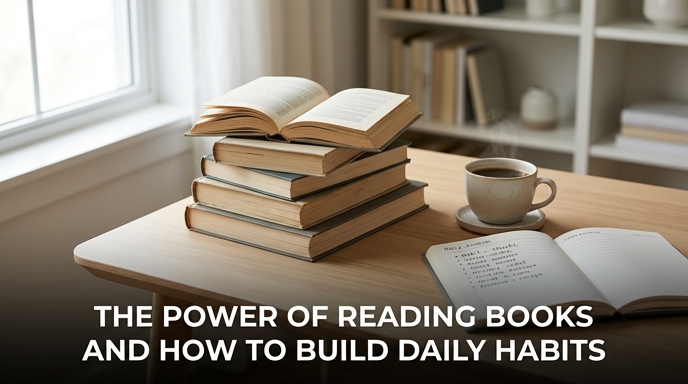
The greatest challenge after starting is long-term consistency. Creating a daily reading books habit that lasts requires integrating reading time into your daily schedule. Placing physical books in easily visible spots, like on your work desk or bedside table, acts as a powerful visual trigger.
Interestingly, stacking reading time with existing habits is also very helpful. You can squeeze in ten minutes of reading immediately after your morning coffee or right before going to sleep. If repeated for several weeks, reading will become an automatic, enjoyable necessity rather than a forced chore.
Real Steps Toward Transformation
Making reading a daily part of life is one of the best investments in personal development. The range of benefits from sharpening focus and preventing stress to expanding your horizons can be felt as soon as you take that first step. Open the first page of your chosen book today, dedicate ten consistent minutes to it, and enjoy the meaningful growth of your mindset.
Frequently Asked Questions
What is the ideal daily reading duration for beginners?
Daily reading for beginners should ideally start with 10 to 15 minutes per day. The primary focus for beginners is building consistency rather than chasing long durations or a high page count.
Is reading printed books superior to reading digital books?
Physical books provide a tactile sensation of paper and minimize exposure to digital blue light. Conversely, e-books offer accessibility and convenience while traveling. Both provide equivalent intellectual benefits.
How do I overcome drowsiness while reading?
Drowsiness can be overcome by reading in a well-lit room and sitting upright in a comfortable chair. Avoid reading in bed in a lying position, as this signals excessive relaxation to your body.
Does reading fiction provide the same intellectual benefits as non-fiction?
Fiction is highly effective for training social empathy, emotional intelligence, and creative imagination. Meanwhile, non-fiction focuses on enriching theoretical facts, logical analysis, and practical skill application.
When is the most effective time to read daily?
The best time to read depends entirely on individual preference. Reading in the morning helps sharpen focus before work, while reading at night serves as a means to relax the mind after a long day.
About the Author