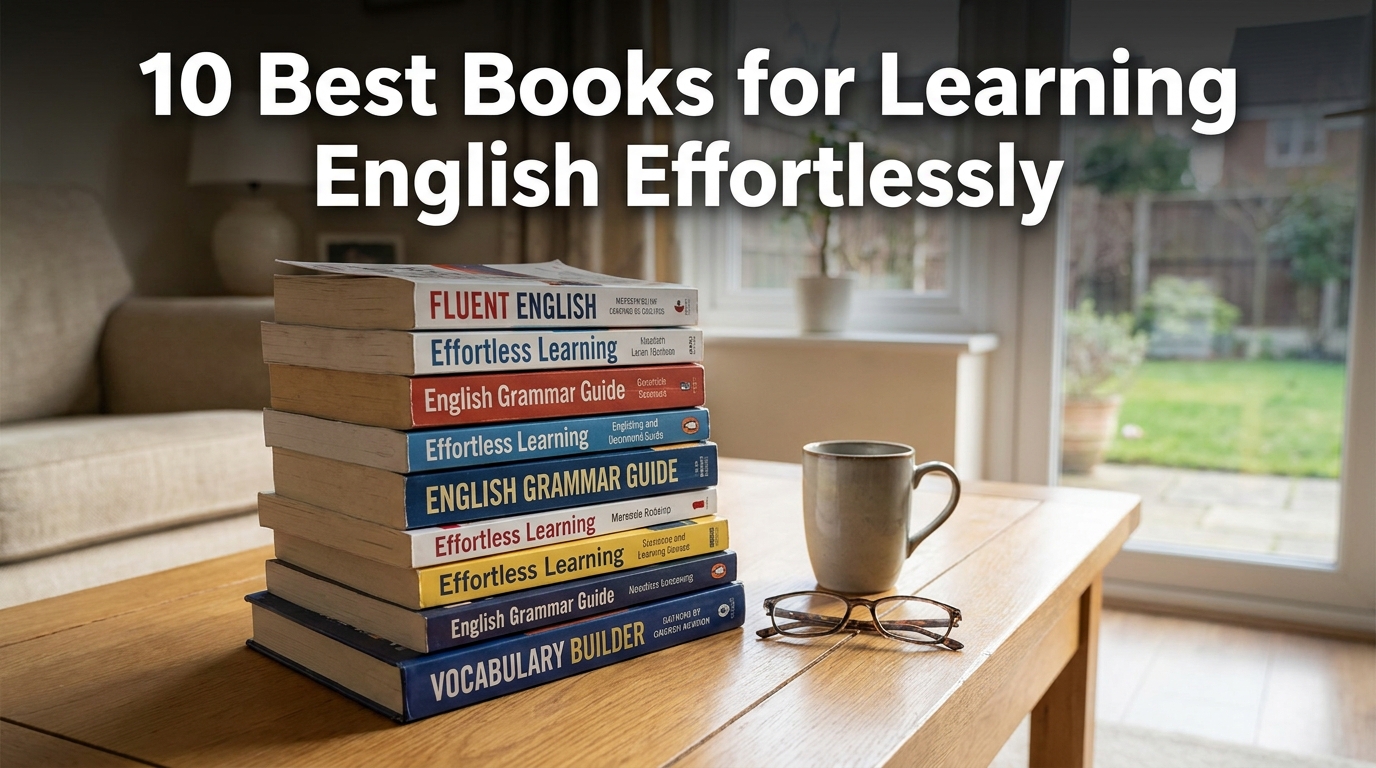
Mastering a new language often feels overwhelming when you do not know where to start. Many students struggle to find reading materials that match their current skill level. Choosing the right resources can significantly speed up your progress in grammar and vocabulary acquisition.
Reading remains one of the most effective methods to improve overall language comprehension. High quality texts allow you to understand grammar rules in real contexts while expanding your vocabulary. This guide presents a curated selection of top resources or books for learning English categorized by proficiency level and learning goals.
Why Choosing English Books Based on CEFR Levels Matters

The Common European Framework of Reference for Languages divides proficiency into levels ranging from A1 to C2. Selecting books tailored to these levels keeps learners motivated and prevents frustration.
Beginners benefit from simple sentence structures and direct explanations. Advanced students need complex texts that offer deeper insights and rich stylistic devices. Understanding standard CEFR levels helps you set realistic goals for reading comprehension.
Top English Learning Books for Beginners A1 and A2
Beginners should focus on mastering basic sentence structures and daily vocabulary. Choosing accessible reading materials builds confidence right from the start.
English Grammar in Use by Raymond Murphy
This famous edition from Cambridge English serves as a primary reference for millions of learners worldwide. Grammar explanations appear alongside practical exercises on facing pages. The intuitive two page layout lets you study theory on the left and practice on the right.
Oxford Bookworms Library Series
This collection of Graded Readers from Oxford University Press makes reading stories approachable. Classic and modern tales are adapted with controlled vocabulary for early stage learners. The learn English through reading approach becomes genuinely enjoyable without requiring constant dictionary searches.
Essential Grammar in Use
This specific guide caters to students who are encountering formal grammar rules for the first time. Explanations remain clear and feature plenty of visual aids. The targeted practice exercises quickly reinforce foundational concepts.
Best Books for Learning English at Intermediate Levels B1 and B2
Intermediate learners need materials that challenge their comprehension while driving steady vocabulary building.
Word Power Made Easy by Norman Lewis
This classic text focuses on building vocabulary through Latin and Greek root words. Norman Lewis guides readers to understand word origins logically. As a result, you can decipher new vocabulary easily without relying on rote memorization.
Practical English Usage by Michael Swan
Published by Oxford University Press, this reference answers common grammar questions that confuse intermediate learners. Organized alphabetically like an encyclopedia, it allows you to look up specific grammar guide rules instantly.
The Curious Incident of the Dog in the Night-Time by Mark Haddon
This novel is ideal for ESL students stepping into full length English fiction. The language remains accessible while delivering a compelling narrative. Reading fiction in this manner builds natural reading fluency over time.
Recommended Books for Advanced Learners C1 and C2
Advanced students require challenging academic, business, or literary texts to achieve native like fluency.
Advanced Grammar in Use by Martin Hewings
This advanced reference addresses complex rules and subtle exceptions in English grammar. Martin Hewings provides specialized content suitable for academic writing and international exam preparation.
Market Leader Series
Professionals seeking to master Business English will find comprehensive guidance in this series. Case studies draw directly from authentic Financial Times articles. The specialized terms presented align perfectly with modern workplace demands.
Animal Farm by George Orwell
This literary classic offers clear prose layered with deep allegorical meaning. Reading works by George Orwell sharpens reading comprehension at a higher analytical level.
The Elements of Style by William Strunk Jr and E B White
This concise writing manual offers precise principles for effective communication. Readers learn to construct clear, powerful sentences suitable for professional contexts.
How to Choose the Best Books for Learning English
Before purchasing new study materials, evaluate key factors to ensure your investment delivers results.
- Assess your current proficiency using self assessment tools or official CEFR benchmarks.
- Define your primary objective, whether it is academic writing, casual conversation, or professional growth.
- Seek recommendations from educators or fellow students who share similar goals.
- Select a format that fits your daily routine, such as print copies or digital editions.
Effective Reading Strategies to Boost Language Skills
Reading yields maximum results when paired with active learning techniques. Avoid reading passively from start to finish without interacting with the text.
Keep a dedicated notebook to record newly encountered terms alongside example sentences. Reading paragraphs aloud helps refine pronunciation and sentence rhythm simultaneously. As a recommendation, reading for fifteen minutes every day produces far better results than cramming for several hours once a week.
Achieving English Fluency Through Consistent Reading
Mastering a foreign language requires a step by step approach that remains enjoyable. Using reliable ESL books tailored to your proficiency level makes learning rewarding rather than stress inducing. Begin with accessible titles that align with your personal interests today. Practice applying new words and grammatical structures in daily conversations or journal entries. With steady commitment and quality resources, reaching natural fluency becomes an achievable reality.
Commonly Asked Questions About Learning Materials
Can absolute beginners start reading full length novels right away?
Beginners should start with Graded Readers to build confidence before attempting unabridged fiction.
How much time should learners spend completing a grammar workbook?
Working through two or three exercise units per week provides a balanced pace for steady progress.
Are older editions of grammar reference books still useful today?
Core grammar rules remain constant over time, making earlier editions completely suitable for study.
How can students prevent boredom when studying a grammar guide?
Alternate grammar study sessions with light fiction or audio materials to keep your routine engaging.
Is self study more effective than enrolled classroom instruction?
Both approaches offer distinct advantages, though quality English learning books accelerate progress in any setting.
About the Author