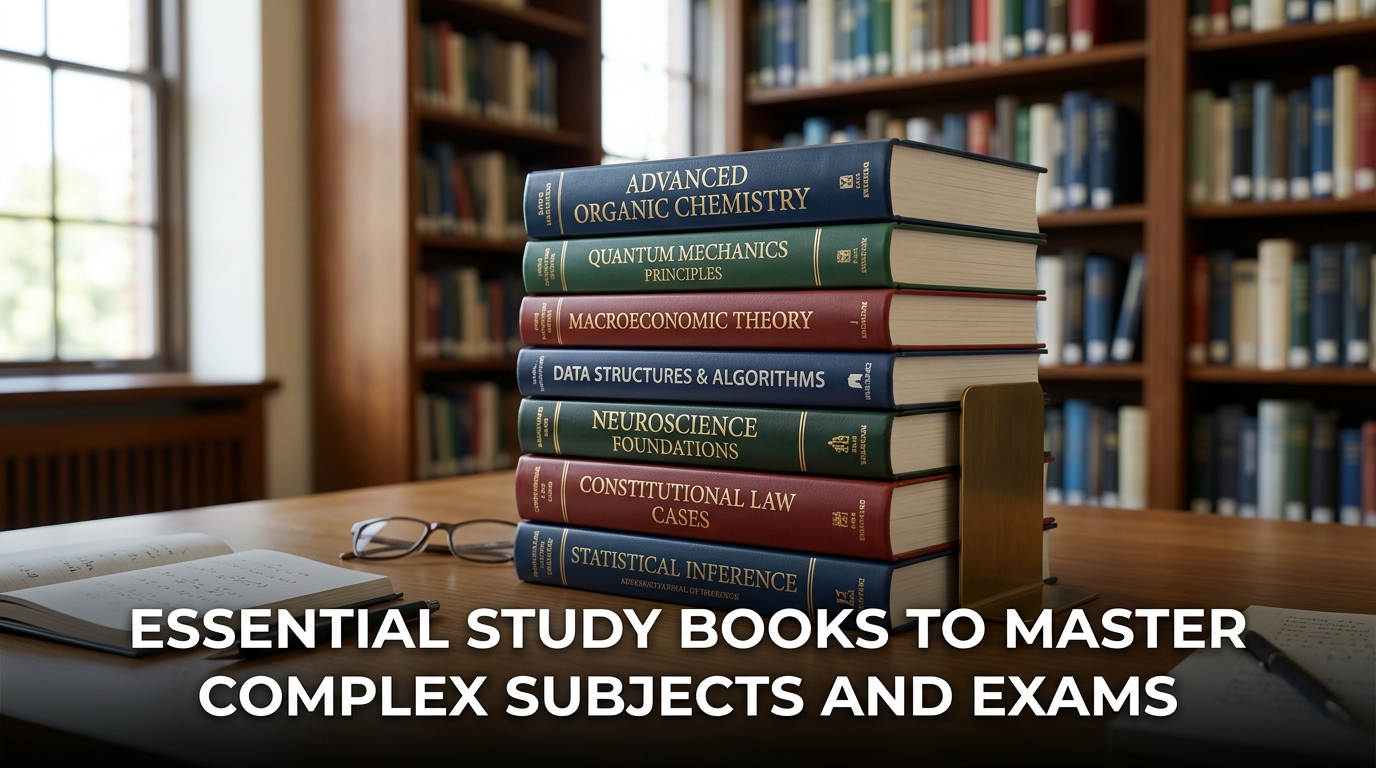
Facing high academic demands often requires more than just reading the main textbook in class. Many students and scholars feel overwhelmed when they have to understand thick chapters filled with complex terms. Therefore, using quality study books becomes a strategic step to summarize difficult concepts so that you can understand them more thoroughly.
Furthermore, the use of companion study guides has proven effective in accelerating the understanding of complex material. Unlike standard textbooks that focus on lengthy theoretical explanations, authors design study guides to be concise with an emphasis on key points. This advantage makes exam preparation and college entrance testing more structured and efficient.
Additionally, for academics who want to optimize study time, choosing the best study books relevant to the curriculum is a necessity. A combination of basic theory and intensive practice questions will increase your long-term memory retention. As a result, a deep understanding of concepts is ready to guide you to achieve maximum academic results.
The Important Role of Companion Books in Academic Learning

The main textbooks from campus or school often present information that is very broad, but sometimes readers find it difficult to digest quickly. This is where the important role of concise reference materials comes in, bridging those theoretical explanations. These guides filter the essence of the material so that readers can grasp the basic logic of a topic without getting lost in complex details.
Furthermore, companion books also provide material mapping that is aligned with the syllabus of national and international exams. Students can see the connections between chapters visually through diagrams and key point summaries. As a result, a systematic structure helps the brain process information in a more organized manner.
Besides that, utilizing study guides also trains independent analysis skills through the completion of scientific cases. Each chapter usually includes practice questions that are relevant to academic evaluation standards. This makes the exam preparation process feel more focused from the beginning of the semester.
Advantages of Using Concise Study Guides
- Presents simplification of complex concepts into easy-to-understand points.
- Equipped with diagrams, tables, and concept maps to facilitate material mapping.
- Provides practice questions adjusted to actual exam patterns.
- Helps cut down study time without reducing understanding of core material.
- Facilitates the process of reviewing material before test execution.
Cross-Reading Strategy Between Primary Textbooks and Study Guides
Relying only on one type of reading source is often not enough to master dynamic subjects. Therefore, the cross-reference method between primary textbooks and study books for exam preparation is the most effective approach. This step ensures your theoretical understanding remains strong while being ready to face variations in exam questions.
The first step begins with reading the relevant chapter in the primary textbook to get a complete contextual overview. After that, open the concise study guide to see the concept map and key points you need to memorize. This two-way approach will clarify parts that previously felt confusing.
Meanwhile, use the companion guide to test the extent to which you understand the chapter you have read. Doing practice questions without looking at the answer key will reveal which parts you still need to study again. As a result, this self-evaluation process becomes an indicator of your readiness before facing the actual exam.
| Study Phase | Primary Resource | Companion Study Guide | Objective & Target |
| Concept Exploration | Standard Academic Textbooks (e.g., OpenStax) | Concept Summary Manuals | Build comprehensive theoretical foundational knowledge |
| Active Reinforcement | Lecture Notes & Syllabi | Flashcards & Workbook Exercises | Memorize critical terminology and basic formulas |
| Exam Readiness | Past Exam Papers | Standardized Test Prep Guides (e.g., Barron’s, Kaplan) | Practice timing, question variations, and scoring acc |
Choosing Study Book Types According to Academic Needs
Every discipline has different characteristics and levels of difficulty. Therefore, you must adjust the selection of essential study books for students according to the focus of the subjects taken. Choosing the right type of book will have a direct impact on your daily study time efficiency.
For example, for exact sciences like mathematics, physics, or chemistry, choose guides that focus on problem-solving and practical formulas. These types of books usually provide logical, step-by-step solutions for every question. Understanding the flow of the solution is far more important than just memorizing the final formula.
On the other hand, for social sciences and humanities, I highly recommend guides that are rich in mind maps and historical chronologies. A well-organized narrative structure helps readers understand the flow of events and cause-and-effect relationships between concepts. In addition, grouping material visually will facilitate the process of recalling memory during exams.
| Academic Discipline | Recommended Guide Series | Primary Focus | Practical Application |
| Exact Sciences & STEM | Schaum’s Outlines (McGraw-Hill) | Step-by-step problem solving | Engineering, Calculus, and Physics drills |
| Social Sciences & History | QuickStudy Academic Lamincotes / Crash Course | Chronological mind maps & charts | Sociology, Law, and Historical cause-effect analysis |
| Standardized Test Prep | The Princeton Review / Barron’s Prep Series | Realistic full-length mock exams | SAT, GRE, GMAT, and AP subject test preparation |
Types of Study Guides You Must Have
- Syllabus Summary Books for material mapping during one semester.
- Problem-Solving Manuals specifically for science and engineering subjects.
- Practice Question and Discussion Guides for real exam simulations.
- Glossaries and Dictionaries of Terms to enrich academic technical vocabulary.
Effective Study Techniques Using Independent Guides
Having a collection of the best study references will not provide optimal results if not accompanied by the correct study methods. Therefore, apply spaced repetition techniques when studying material summaries. Repeating readings at certain time intervals is proven to significantly strengthen long-term memory.
As an additional recommendation, combine reading activities with making small notes using your own words. Rewriting newly learned concepts trains the brain to process information actively, not passively. This simple step is effective for preventing drowsiness and boredom while studying for long periods.
Finally, for a maximum experience, use time management techniques such as the Pomodoro method when studying each chapter. Studying for 25 minutes followed by a short 5-minute break will keep your mind sharp. Discipline in managing study time will bring major changes to your academic achievements.
Building Consistent Independent Study Habits
The main key to academic success lies in consistency in reviewing material continuously, rather than studying suddenly right before an exam. Using study guides as a daily companion makes the study load feel lighter and more measurable. Thus, the small steps you take every day will accumulate into a solid understanding.
Additionally, vary your study methods with group discussions to discuss difficult questions from practice books. Explaining material to friends is the best way to test the depth of your own understanding. This collaboration creates a more interactive and enjoyable learning atmosphere.
Steps Toward Academic Success
The use of the right study books has proven to be one of the best investments in a person’s educational journey. Combining an understanding of basic concepts from textbooks and structured practice from companion books creates a very efficient learning pattern. The clarity of the material and the ease of reviewing difficult chapters will increase your self-confidence when facing exams. Therefore, start compiling your list of study references now and feel the real improvement in your academic achievement.
Information Regarding Academic Study Strategies
Can study guides fully replace the role of primary textbooks?
Authors design study guides as companions to accelerate understanding, so we do not suggest these guides replace primary textbooks entirely, as textbooks provide a deeper theoretical background.
How to choose practice question books that have high standards?
Choose practice books that present detailed explanations of answers and are compiled by authors with trusted academic backgrounds in their fields.
How much ideal time is needed to study one chapter of a concise guide?
Ideal time ranges between 45 to 60 minutes per chapter, which includes reading material summaries, understanding diagrams, and doing independent practice questions.
Is the cross-reading method suitable for all subjects?
The cross-reading method is very effective for almost all subjects, especially those requiring deep theoretical understanding and technical calculations.
How to overcome boredom when having to read many companion books at once?
Use the technique of alternating subjects, create visual summaries like mind maps, and make sure to take breaks periodically between study times.
About the Author